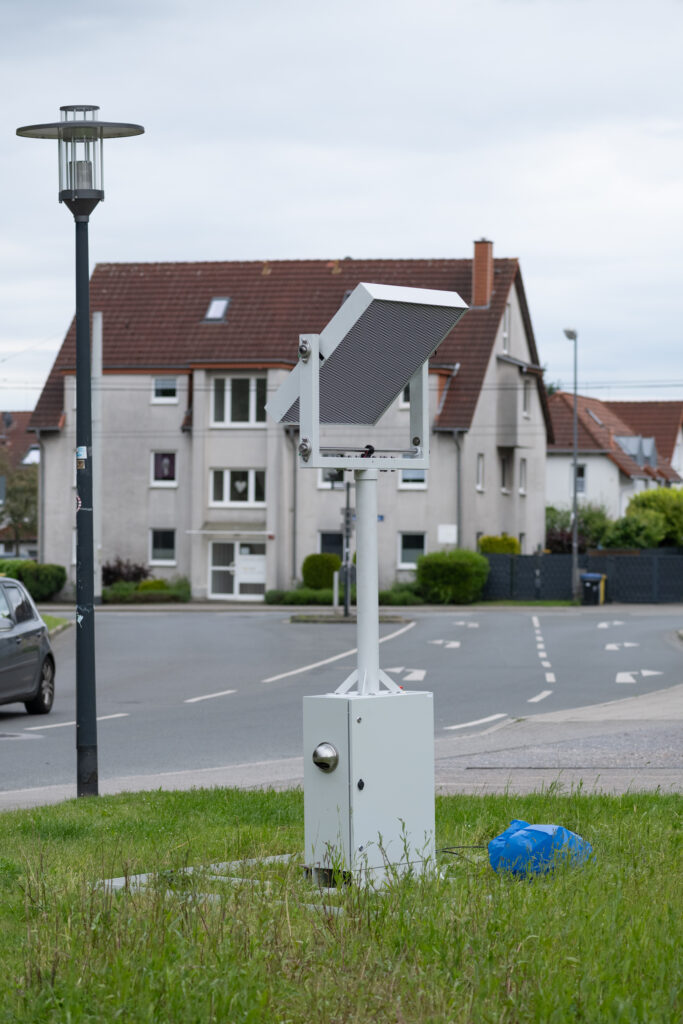
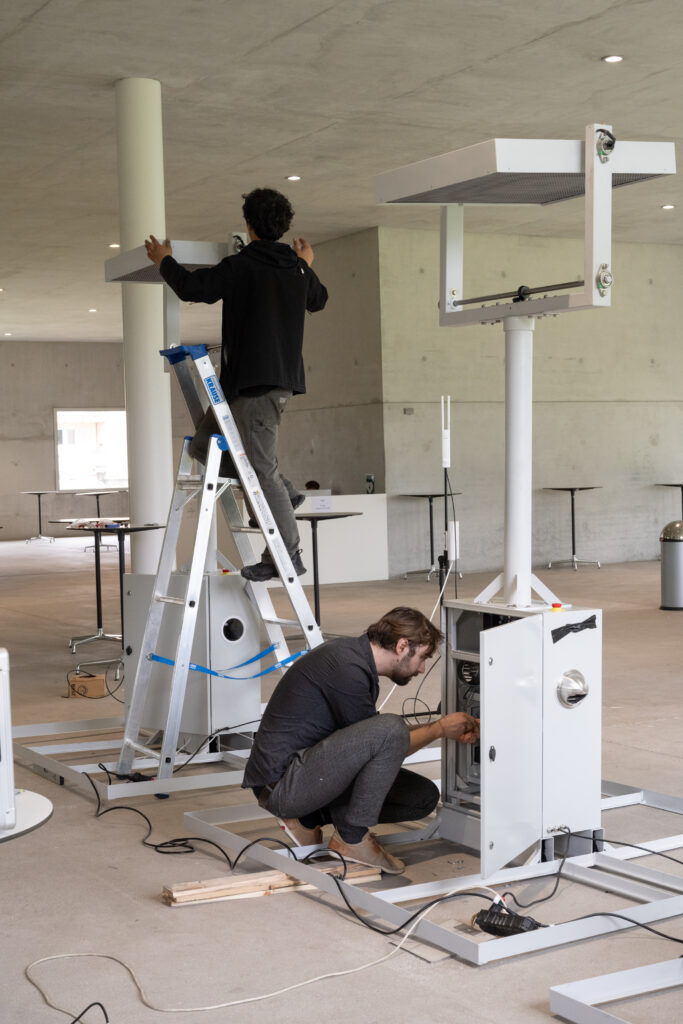
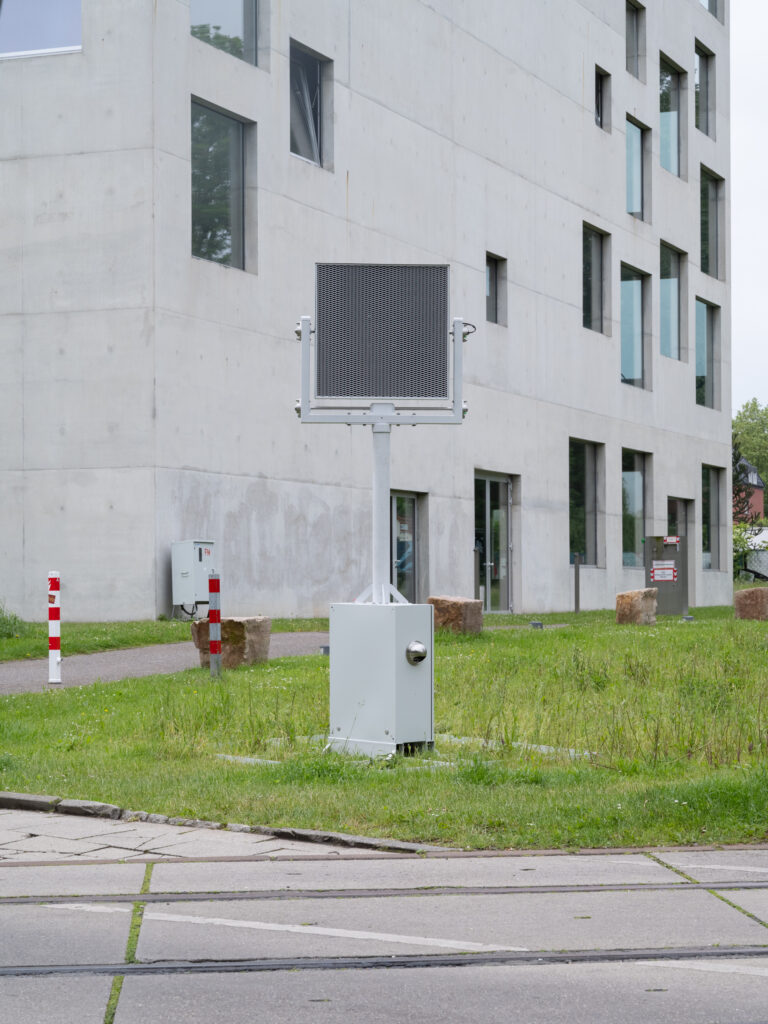
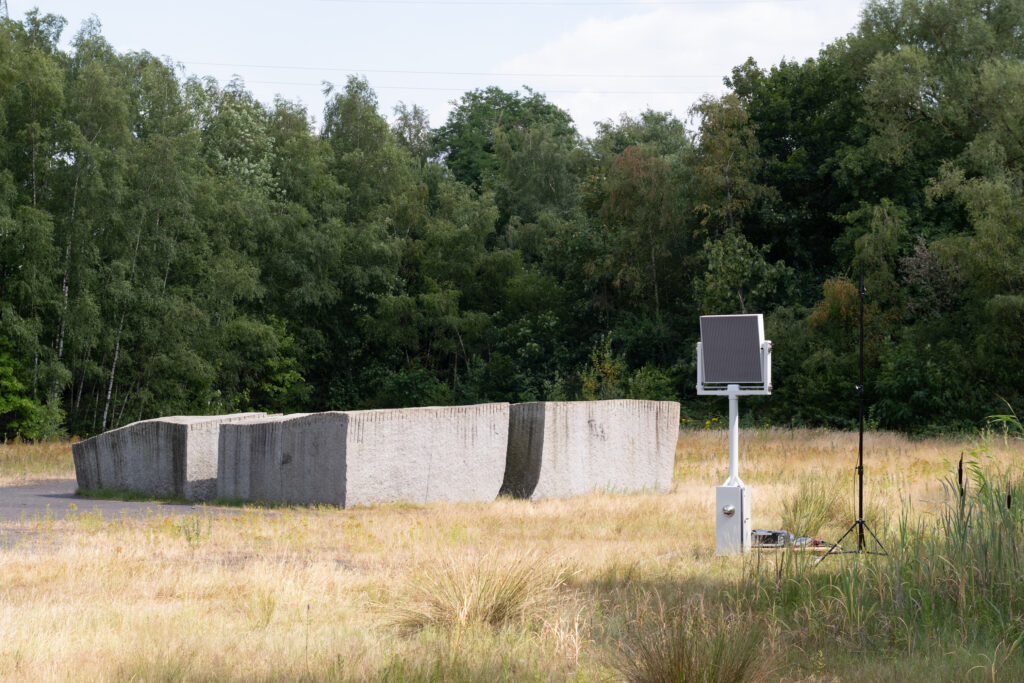
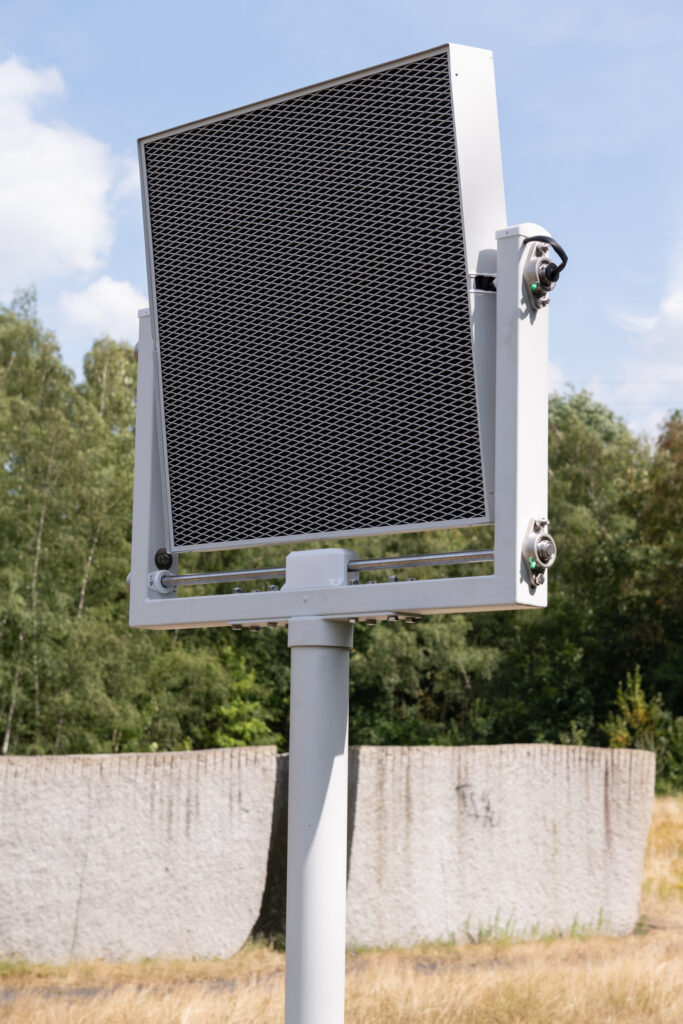
Spatial Sound Reproduction in Outdoor Environments, abbreviated SKIA, is a novel multi-channel system for spatial sound reproduction specifically designed for outdoor use. Unlike conventional methods tailored to acoustically controlled indoor environments (such as anechoic chambers or room-within-room constructions), this setup engages directly with the acoustic reality of urban or landscape outdoor spaces.
The initiative is launched and led by the Sound Practice Research study program at Folkwang University of the Arts, which aims to further develop its practice-oriented teaching approach in the fields of sound, research, and artistic practice through this project. In close collaboration with other departments and external experts in acoustics, sound studies, media technology, architecture and urban planning, an interdisciplinary system was designed to pursue two central objectives:
Precise spatial navigation of sound in open environments – achieved through adaptive loudspeaker arrangements, sound-based sensorics, and location-specific compositional methods.
Integration of the acoustic unpredictability of outdoor surroundings as a creative element – not as a disturbance, but as an integral component of an expanded environmental perception. This also includes aspects of body-environment relationships and the staging of attention within complex contexts.
A particular application area for the system lies in the vicinity of the Zollverein Essen UNESCO World Heritage Site, in the context of the SANAA building, where a significant portion of the Sound Practice Research study program’s teaching takes place. The architecturally and urbanistically distinctive site offers numerous exceptional spatial situations – ranging from open natural areas to semi-enclosed courtyards and large-scale former mining buildings – which are ideally suited for experimental sound interventions.
The project understands itself as an innovative contribution to a more open, inclusive, and artistically experiential sound reality. It offers new impulses for spatial concepts that are defined not by control, but by interaction, openness, and situational awareness.
Fotos: Lennart Pimpl